Emergency Response
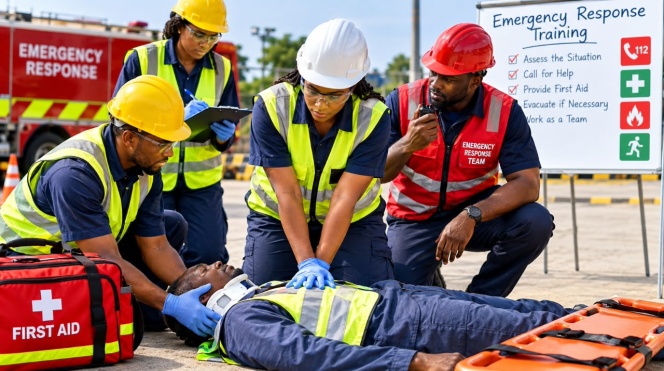
Our Emergency Response Programme provides practical training in emergency preparedness, first response, basic life support, CPR, AED awareness, first aid, casualty assessment, emergency communication, bleeding control, trauma awareness, evacuation, and emergency scene management.
About this course
Our Emergency Response Programme provides practical training in emergency preparedness, first response, basic life support, CPR, AED awareness, first aid, casualty assessment, emergency communication, bleeding control, trauma awareness, evacuation, and emergency scene management.
The programme is designed to equip learners with the knowledge, practical skills, confidence, and awareness required to respond appropriately to emergencies while waiting for or supporting the arrival of professional emergency services.
Whether you are starting a career in emergency healthcare, prehospital care, occupational safety, healthcare support, community response, or emergency management, or simply want to develop practical emergency response skills, this programme provides relevant training for a range of emergency situations.
The programme emphasizes rapid assessment, personal safety, effective communication, teamwork, appropriate first response, patient dignity, emergency preparedness, and safe decision-making within the responder's level of training.
Training is relevant to healthcare facilities, workplaces, schools, communities, construction sites, industrial environments, public spaces, homes, and other settings where emergencies may occur.
Learn to Respond. Act Safely. Support Life. Be Prepared for Emergencies.
Learning objectives
- Understand the principles of emergency preparedness and response.
- Assess an emergency scene while considering personal safety, hazards, and the safety of others.
- Recognize common medical and traumatic emergencies and determine when urgent professional assistance is required.
- Apply basic principles of first response and first aid within their level of training.
- Understand and demonstrate appropriate CPR and Basic Life Support (BLS) procedures during practical training.
- Understand the role and basic operation of an Automated External Defibrillator (AED).
- Recognize signs of cardiac arrest, breathing emergencies, unconsciousness, and other life-threatening conditions.
- Understand basic methods of controlling external bleeding and responding to common injuries.
- Provide appropriate initial support for fractures, sprains, burns, wounds, shock, and other common emergencies.
- Recognise potential medical emergencies and understand appropriate first-response actions.
- Understand basic emergency response for choking and airway emergencies.
- Apply safe principles for moving, positioning, and assisting casualties when movement is necessary.
- Communicate effectively with emergency services, healthcare professionals, patients, relatives, colleagues, and members of the public.
- Understand basic emergency evacuation, incident management, and emergency preparedness procedures.
- Apply principles of infection prevention, PPE, confidentiality, patient dignity, and professional conduct during emergency response.
- Demonstrate teamwork, calm communication, compassion, and responsible decision-making during emergency situations.
Who this course is for
- Individuals starting a career in emergency healthcare, first response, or prehospital care.
- Healthcare Assistants, Care Support Workers, caregivers, and other healthcare support personnel.
- School leavers and adults seeking practical emergency response training.
- Workers who may be required to respond to emergencies in the workplace.
- Safety officers, supervisors, team leaders, and workplace emergency response personnel.
- Teachers, school staff, community workers, security personnel, and other individuals who may encounter emergencies.
- Individuals working in healthcare, construction, oil and gas, manufacturing, hospitality, logistics, education, and other occupational environments.
- People interested in developing practical knowledge of first aid, CPR, BLS, AED awareness, and emergency preparedness.
- Anyone who wants to develop the confidence and knowledge to respond appropriately during an emergency while professional help is being arranged.
Entry requirements
Student must have a minimum Senior Secondary Certificate Examination (SSCE) or an academic qualification of any discipline, including Technical, Business, Art, Commercial, Engineering, or Science.
Student must be 18 years and above.
Duration & delivery format
Proposed duration: 1 month.
Monday, Thursday and Friday4:00pm – 7:00pm2 days hands on Practical
One Week Offline Classroom Training — (Optional)
Modules & syllabus
- 1. Introduction to Emergency Response
- 2. Emergency Scene Safety and Assessment
- 3. First Aid Principles
- 4. Basic Life Support (BLS)
- 5. CPR and AED Awareness
- 6. Airway and Breathing Emergencies
- 7. Choking and Airway Obstruction
- 8. Bleeding and Wound Management
- 9. Shock and Medical Emergencies
- 10. Trauma and Injury Response
- 11. Patient Assessment and Monitoring
- 12. Safe Patient Movement and Positioning
- 13. Emergency Communication
- 14. Emergency Evacuation and Incident Management
- 15. Emergency Response in the Workplace
- 16. Fire and Emergency Preparedness
- 17. Infection Prevention and Personal Protective Equipment
- 18. Multiple Casualty and Disaster Awareness
- 19. Emergency Response Teamwork and Professionalism
- 20. Practical Emergency Response Training
Practical skills
- Understand the principles of emergency preparedness and response.
- Assess an emergency scene while considering personal safety, hazards, and the safety of others.
- Recognize common medical and traumatic emergencies and determine when urgent professional assistance is required.
- Apply basic principles of first response and first aid within their level of training.
- Understand and demonstrate appropriate CPR and Basic Life Support (BLS) procedures during practical training.
- Understand the role and basic operation of an Automated External Defibrillator (AED).
- Recognize signs of cardiac arrest, breathing emergencies, unconsciousness, and other life-threatening conditions.
- Understand basic methods of controlling external bleeding and responding to common injuries.
- Provide appropriate initial support for fractures, sprains, burns, wounds, shock, and other common emergencies.
- Recognise potential medical emergencies and understand appropriate first-response actions.
- Understand basic emergency response for choking and airway emergencies.
- Apply safe principles for moving, positioning, and assisting casualties when movement is necessary.
- Communicate effectively with emergency services, healthcare professionals, patients, relatives, colleagues, and members of the public.
- Understand basic emergency evacuation, incident management, and emergency preparedness procedures.
- Apply principles of infection prevention, PPE, confidentiality, patient dignity, and professional conduct during emergency response.
- Demonstrate teamwork, calm communication, compassion, and responsible decision-making during emergency situations.
Assessment & examination
Not specified.
Certificate information
Not specified.
Course dates & location
Not specified.
Not specified.
Your instructor
Not specified.
Your next step
Your next chapter starts here.
Find your programme, ask about entry requirements and explore flexible ways to learn. Our admissions team can help you get started.