School Basic Healthcare and Emergency Response for Teachers
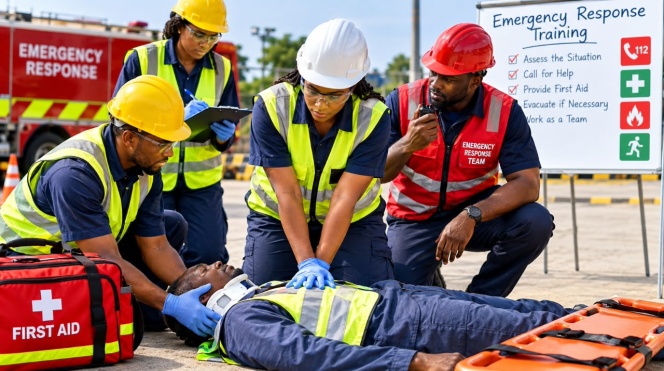
Our School Basic Healthcare and Emergency Response Programme provides practical training for teachers and school personnel in basic healthcare support, emergency recognition, first aid awareness, CPR, AED awareness, choking response, injury management, infection prevention, safeguarding, emergency communication, and school emergency preparedness.
About this course
Our School Basic Healthcare and Emergency Response Programme provides practical training for teachers and school personnel in basic healthcare support, emergency recognition, first aid awareness, CPR, AED awareness, choking response, injury management, infection prevention, safeguarding, emergency communication, and school emergency preparedness.
The programme is designed to equip teachers and school staff with the knowledge, practical skills, confidence, and awareness required to respond appropriately when a student experiences an illness, injury, accident, or other emergency during school activities.
Teachers and school personnel are often among the first adults present when a child becomes unwell or suffers an injury. This programme therefore focuses on early recognition, safe immediate response, appropriate first aid, effective communication, infection prevention, and timely referral to parents, guardians, emergency services, or qualified healthcare professionals.
The programme does not replace professional medical care. Instead, it prepares school personnel to provide appropriate assistance within the limits of their training while waiting for qualified medical assistance when required.
Recognise. Respond. Protect. Support.
Learning objectives
- Recognise common illnesses, injuries, and emergencies that may occur in school environments.
- Conduct a basic and safe initial assessment of an ill or injured student.
- Understand when and how to activate emergency medical assistance.
- Apply basic first-aid principles within their level of training.
- Understand and demonstrate basic CPR principles during practical training.
- Understand the purpose and safe use of an AED.
- Recognise and respond appropriately to choking and airway obstruction.
- Understand how to respond to common school injuries such as cuts, bleeding, burns, sprains, and minor injuries.
- Recognize signs that may indicate that a student requires urgent medical attention.
- Apply appropriate infection-prevention and hygiene measures.
- Understand appropriate use of gloves and other basic PPE.
- Respond appropriately to incidents occurring during sports, playground activities, school trips, laboratories, workshops, and classroom activities.
- Understand basic procedures for supporting students with existing health conditions while following school policies and professional guidance.
- Communicate effectively with parents, guardians, school administrators, emergency services, and healthcare professionals.
- Understand the importance of accurate incident documentation and reporting.
- Demonstrate appropriate student dignity, privacy, compassion, and professionalism.
- Understand the importance of child safeguarding and professional boundaries.
- Work effectively as part of a school emergency response team.
- Recognise the limits of their training and seek professional medical assistance when required.
- Promote a safer and better-prepared school environment.
Who this course is for
- Teachers and classroom teachers.
- School principals, head teachers, and administrators.
- Teaching assistants and classroom support staff.
- School nurses and health coordinators seeking additional emergency-response training.
- Early childhood educators and nursery school staff.
- Primary and secondary school personnel.
- Sports teachers, coaches, and physical education instructors.
- School counsellors and student-support personnel.
- Boarding-school staff and house parents.
- Laboratory and workshop instructors.
- School security and support personnel.
- School transport personnel and designated school emergency responders.
- Staff involved in school trips, excursions, sports events, and extracurricular activities.
- Individuals working with children and young people who require basic healthcare and emergency-response awareness.
Entry requirements
Applicant should have a minimum Senior Secondary School Certificate Examination (SSCE) or equivalent qualification.
The programme is suitable for individuals from Education, Arts, Science, Commercial, Technical, Business, Engineering, and other academic backgrounds.
Applicants should be 18 years and above.
Duration & delivery format
Proposed duration: 4 weeks.
Online Classes: Monday, Wednesday & Friday, 6:00–8:00 PM
Offline Hands-On Training: 2 full practical days during the final week
Modules & syllabus
- 1. Introduction to School Healthcare and Emergency Response
- 2. Understanding Common School Health Emergencies
- 3. Basic Student Assessment
- 4. First Aid Principles for Schools
- 5. CPR and Basic Life Support Awareness
- 6. AED Awareness
- 7. Choking and Airway Emergencies
- 8. Common School Injuries
- 9. Sports and Playground Emergencies
- 10. Infection Prevention and Hygiene
- 11. Recognising Serious Illness
- 12. Supporting Students with Health Conditions
- 13. Child Safeguarding and Professional Boundaries
- 14. Emergency Communication
- 15. Incident Reporting and Documentation
- 16. School Emergency Preparedness
- 17. Emergency Response During School Trips
- 18. Psychological and Emotional Support
- 19. Teamwork, Safety and Professionalism
- 20. Practical School Emergency Response and Assessment
Practical skills
- Recognise common illnesses, injuries, and emergencies that may occur in school environments.
- Conduct a basic and safe initial assessment of an ill or injured student.
- Understand when and how to activate emergency medical assistance.
- Apply basic first-aid principles within their level of training.
- Understand and demonstrate basic CPR principles during practical training.
- Understand the purpose and safe use of an AED.
- Recognise and respond appropriately to choking and airway obstruction.
- Understand how to respond to common school injuries such as cuts, bleeding, burns, sprains, and minor injuries.
- Recognize signs that may indicate that a student requires urgent medical attention.
- Apply appropriate infection-prevention and hygiene measures.
- Understand appropriate use of gloves and other basic PPE.
- Respond appropriately to incidents occurring during sports, playground activities, school trips, laboratories, workshops, and classroom activities.
- Understand basic procedures for supporting students with existing health conditions while following school policies and professional guidance.
- Communicate effectively with parents, guardians, school administrators, emergency services, and healthcare professionals.
- Understand the importance of accurate incident documentation and reporting.
- Demonstrate appropriate student dignity, privacy, compassion, and professionalism.
- Understand the importance of child safeguarding and professional boundaries.
- Work effectively as part of a school emergency response team.
- Recognise the limits of their training and seek professional medical assistance when required.
- Promote a safer and better-prepared school environment.
Assessment & examination
Assessment: Online/theory assessment + practical skills assessment.
Certificate information
Certificate awarded upon successful completion of the required training and assessment.
Course dates & location
Not specified.
Not specified.
Your instructor
Not specified.
Your next step
Your next chapter starts here.
Find your programme, ask about entry requirements and explore flexible ways to learn. Our admissions team can help you get started.